
What is Sea Freight?
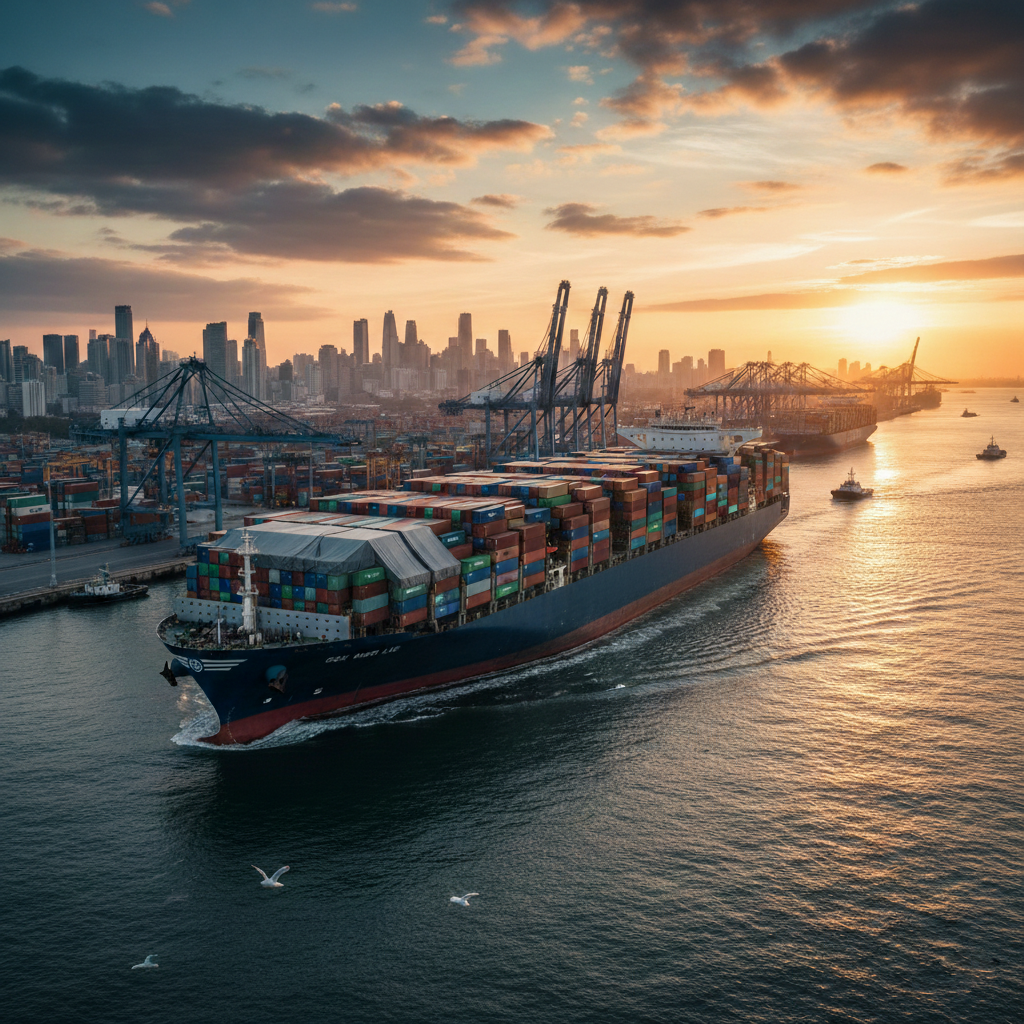
Sea Freight is an international transportation service that moves goods by ocean-going vessels from the port of origin to the port of destination. It is one of the most widely used methods of global shipping, especially for large-volume, heavy, or non-urgent cargo, due to its cost-effectiveness and capacity.
Sea freight transportation is typically carried out using shipping containers. Shippers can choose between Full Container Load (FCL), where one customer uses an entire container, or Less than Container Load (LCL), where cargo is consolidated with shipments from other customers into the same container.
Advantages of Sea Freight
- Cost-effective for large and heavy shipments
- Suitable for bulk cargo and oversized goods
- Ideal for long-distance international trade
- Flexible container options and shipping routes
Limitations of Sea Freight
- Longer transit time compared to air freight
- Requires advance planning
- Possible delays due to weather conditions or port congestion
Types of Sea Freight Services
1.FCL (Full Container Load)
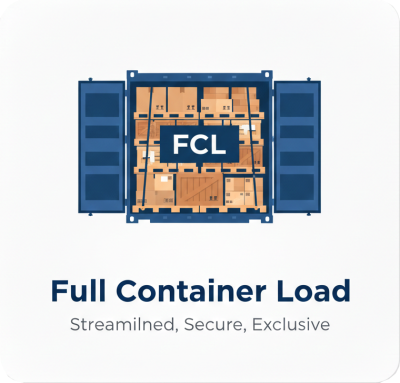
Definition: Shipping a “Full Container.”
Best For: Large shipments or goods that fill up most of a container’s capacity.
Description: This refers to a shipment where one importer/exporter has exclusive use of an entire shipping container (e.g., 20ft or 40ft). You do not share the space with any other shippers.
Key Advantages:
- Speed: Faster transit times because the container doesn’t need to be opened for consolidation or deconsolidation.
- Security: Lower risk of damage or loss since the container is sealed from the origin to the destination.
- Cost-Effective: Usually cheaper per unit if you have enough volume to fill the container.
2.LCL (Less than Container Load)
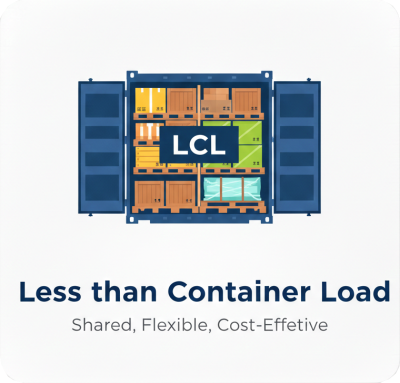
Definition: Shipping “Less than a Container” or “Consolidation.”
Description: This is used when your cargo volume is not large enough to fill a full container. Your goods are grouped (consolidated) with shipments from other people to fill one container. Shipping costs are calculated based on the volume (CBM – Cubic Meters).
Best For: Small businesses, SMEs, or shipments consisting of only a few pallets or boxes.
Key Advantages:
- Flexibility: You can ship smaller amounts frequently without waiting to produce enough to fill a whole container.
- Savings: You only pay for the space you actually use, making it affordable for small loads.
| Feature | LCL (Shared) | FCL (Full) |
|---|---|---|
| Cargo Volume | Small (a few boxes or pallets) | Large (full container) |
| Costing | Charged per volume (CBM) | Flat rate per container |
| Transit Time | Slower (requires sorting/grouping) | Faster (direct point-to-point) |
| Security | Slightly higher risk of handling | Maximum security (sealed container) |
| Handling | Handled at a CFS (Container Freight Station) | Handled at a CY (Container Yard) |
Tip: If your total cargo volume exceeds 15 CBM, it is usually more economical to book a 20ft FCL container rather than paying for LCL space.
Home